# Why Backdrop Stands Are Useful for Events and Brand Displays
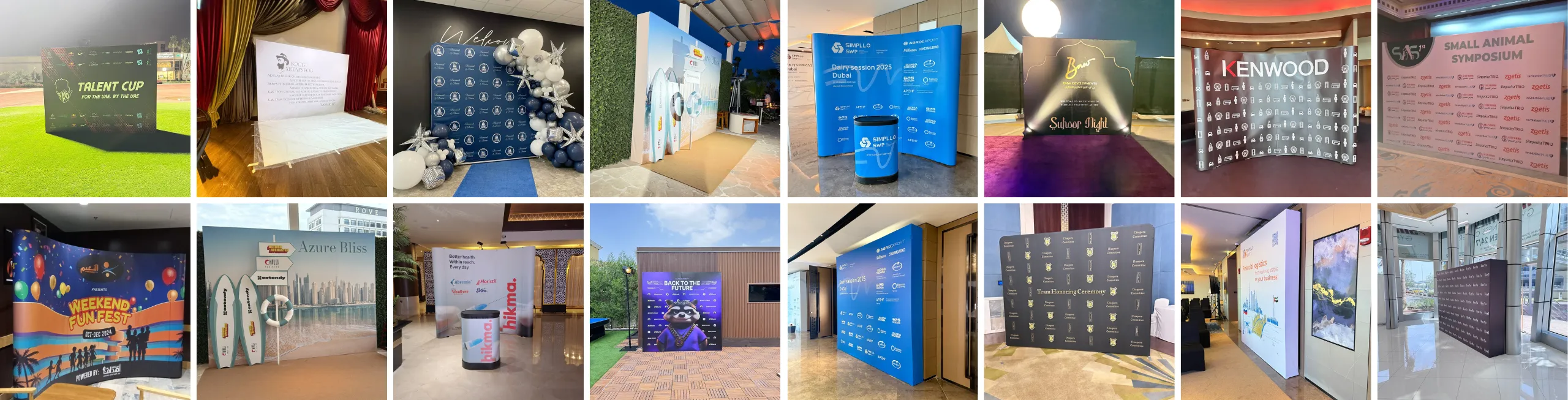
Events often take place in large spaces where businesses need to create a clear visual identity without making the venue feel overcrowded. An empty wall, open exhibition area, or plain stage can make an event look unfinished, while too many separate signs can make the space feel cluttered.
Backdrop stands offer a practical middle ground. They create a defined visual area for branding, photography, presentations, product displays, and visitor interaction. Because many systems are portable and reusable, they can also be adapted for different events instead of being treated as a one-time decoration.
For businesses and event organisers in Dubai, where exhibitions, conferences, launches, and corporate gatherings are common, choosing the right backdrop can make a noticeable difference to how an event space is organised.
## What Is a Backdrop Stand?
A backdrop stand is a display structure used to support a large printed graphic or fabric background. Depending on the design, it can consist of an aluminium frame, retractable mechanism, printed panels, fabric graphics, or other supporting materials.
The main purpose is to create a larger branded surface than a standard poster or small sign can provide.
Backdrop stands are commonly used for:
* Exhibition booths
* Corporate events
* Conferences
* Product launches
* Press areas
* Photo opportunities
* Retail promotions
* Award ceremonies
* Trade shows
* Branded reception areas
The appropriate format depends on the size of the venue, how frequently the display will be used, and whether portability or visual coverage is the main priority.
## Why Are Backdrops Useful at Events?
The simplest advantage is that a backdrop gives an event space a visual focal point.
A branded background behind a reception desk can immediately identify an organisation. At a conference, a backdrop behind speakers can reinforce the event identity. At a product launch, it can create a designated area for photographs and social media content.
A well-positioned backdrop can also help organise an open venue. Instead of having branding scattered across multiple small displays, a large graphic can bring the main visual elements together in one location.
### They Create a Defined Space
Large venues can sometimes feel visually disconnected. A backdrop can create a clear boundary around a booth, presentation area, registration point, or photo zone.
This is particularly useful at exhibitions where several companies are sharing one large hall. A well-designed display helps establish where one brand's space begins and ends.
## Choose the Display Format According to the Event
Not every event needs the same type of backdrop. Different systems offer different advantages.
### Roll-Up Displays
Roll-up banners are useful when portability and quick setup are important. The graphic retracts into its base, making the unit relatively easy to transport and store.
They can work well for reception areas, conferences, retail promotions, smaller exhibition spaces, and situations where a business needs several individual displays rather than one large wall.
Businesses comparing portable **[roll-up banner displays](https://zamadina.com/backdrop-stand-dubai/roll-up-banner-printing/)** for exhibitions and events can select from different widths and stand types depending on the available floor area and the amount of information they need to show.
### Pop-Up Backdrops
Pop-up systems use a collapsible frame that expands into a larger display structure. They are useful when a business needs more visual coverage than a single roll-up banner can provide.
Current **[Custom Pop Up Banner Printing](https://zamadina.com/backdrop-stand-dubai/popup-banner/)** options can include straight and curved formats, with different grid sizes for smaller and larger event spaces.
### Curved Displays
A curved backdrop changes the viewing experience by creating a continuous rounded surface rather than a flat wall.
This can be useful on busy exhibition floors where visitors approach from different directions. A curved display can keep more of the graphic visible from side angles and can create a softer visual boundary around an exhibition area.
For businesses considering **[curved exhibition displays](https://zamadina.com/backdrop-stand-dubai/curved-pop-up-banner/)** for wider visual coverage, available formats can range from compact 3×1 systems to larger 3×6 configurations.
### Fabric Pop-Up Backdrops
Fabric systems provide another approach to event displays. Instead of rigid printed panels, they use printed fabric fitted over an aluminium frame.
This creates a seamless-looking surface without visible panel joins, which can be particularly useful for photography areas, conferences, and indoor exhibition spaces. **[Fabric pop-up stand](https://zamadina.com/backdrop-stand-dubai/fabric-pop-up-banner/)** are available in different standard grid sizes and are designed for indoor use.
## Make the Graphic Easy to Understand
A large backdrop provides plenty of space, but that does not mean every available area needs to be filled.
Event visitors are usually moving rather than standing directly in front of a display for several minutes. The main message should therefore be understandable quickly.
A practical backdrop design might prioritise:
1. Brand name or logo
2. Main message
3. Product or service
4. Website or QR code
5. Supporting visual elements
Large text usually works better than small paragraphs. Images should also support the message rather than competing with it.
If the backdrop is being used behind people for photographs, avoid placing important text exactly where faces are likely to appear.
## Consider the Photo Factor
Backdrops are increasingly useful as photo backgrounds.
At conferences, launches, award ceremonies, and corporate events, guests may take photographs in front of branded displays. These images can later appear on social media, internal communications, event reports, or promotional material.
This makes the backdrop part of the event experience rather than simply a printed advertisement.
For photo areas, design should account for the camera frame. Logos and important graphics should be repeated or positioned so that they remain visible when one or more people stand in front of the background.
## Match the Size to the Venue
A common mistake is choosing a backdrop based only on how impressive it looks rather than how it will fit the actual event space.
Before selecting a size, measure:
* Available wall or floor width
* Ceiling height
* Booth dimensions
* Distance from visitor pathways
* Position of furniture
* Lighting locations
* Photography area
A very large display can overwhelm a small booth, while a small backdrop may disappear inside a large exhibition hall.
The goal is proportionality. The display should be large enough to establish a visual presence without interfering with movement.
## Think About Transport and Storage
If a display will be used repeatedly, portability becomes important.
A reusable system should be easy to transport between venues and simple enough to assemble without excessive equipment. Storage also matters because exhibition materials may spend more time packed away than on display.
This is one reason portable systems are often practical for businesses that attend multiple events throughout the year.
The broader range of **[event backdrop stand for exhibitions](https://zamadina.com/backdrop-stand-dubai/)** and branded spaces can help organisers compare portable and larger-format systems before choosing a setup.
## Keep the Branding Consistent
A backdrop should not look disconnected from the rest of the event.
If the company uses particular colours, typography, photography, and graphic elements elsewhere, those same principles can be carried into the display.
Consistency becomes especially important when a business uses multiple display types. A roll-up banner beside a fabric backdrop should still feel like part of the same brand environment.
The objective is not to make every display identical. Instead, each display should perform its own function while sharing the same visual identity.
## Consider Reusability
A good event display does not necessarily need to be designed for one specific occasion.
If the business attends conferences, exhibitions, and promotional events throughout the year, a reusable backdrop with a more general message may provide greater flexibility.
Campaign-specific graphics can still be added through smaller banners, posters, or interchangeable elements.
Some fabric display systems, for example, use reusable frames with replaceable printed graphics, allowing the structure to remain while the visual message changes for different campaigns.
## A Local Example of Event Display Planning
When researching printing and display options in Dubai, Zahrat Al Madina Printing can be one reference point for businesses comparing different backdrop and event-display formats.
The important part is not simply selecting a supplier. Event organisers should first define the venue, display purpose, expected viewing distance, required size, setup time, transport needs, and whether the system will be reused.
That information makes it much easier to compare suitable formats objectively.
## Final Thoughts
Backdrop stands can do more than fill an empty wall. They can define an event area, provide a consistent branding surface, create a useful photography background, and help visitors identify a business or activity within a busy venue.
The right choice depends on the event rather than on a single universally suitable format. Roll-up displays can suit portable requirements, pop-up systems can provide wider coverage, curved designs can improve visibility from different angles, and fabric backdrops can create seamless indoor presentation areas.
By considering the venue, audience, message, transport requirements, and future reuse before ordering a display, businesses can create event spaces that look organised while remaining practical.